Seven Steals From Regional Telly That Beat Any Cinema Trailer
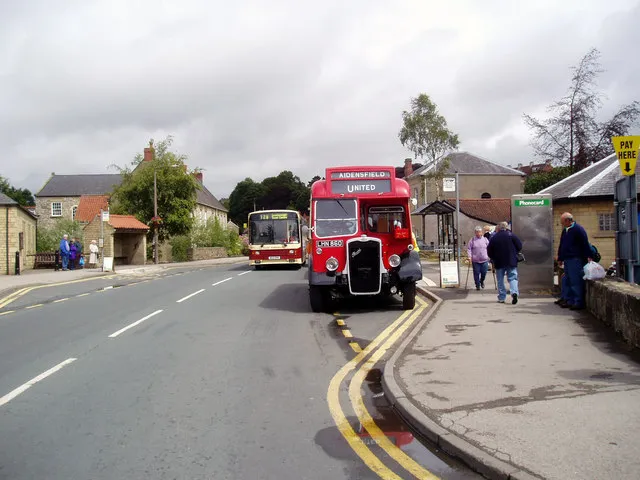
Photo: Dr Neil Clifton, CC BY-SA 2.0, via Wikimedia Commons
There's a house style in UK brand filmmaking at the moment: slow push-ins, a low strings drone, a drone rise over a city that could be anywhere, and a title card that arrives like a verdict. It's borrowed from cinema trailers. It's also, quietly, a bit foreign.
Meanwhile, there's a visual language that British audiences have absorbed for seventy years without ever calling it a language: regional television. It's fast, plain-spoken, geographically specific and astonishingly efficient. It knows exactly where it is and who it's talking to. Brand films could do a lot worse than raid it.
Here are seven steals, each with a production choice attached.
1. The regional news cold open
Watch the first ten seconds of any regional news bulletin. Place name, a face, a map, a promise. No mystery, no withholding. You know where you are before the theme tune resolves.
The steal: build an eight-second opening that answers three questions — who, where, what — before anything pretty happens. Put a real place name on screen. If your brand film is set in Salford, say Salford. Specificity is free and it buys trust immediately.
2. The lower third that does the work of a paragraph
Regional telly lower thirds are ruthlessly functional. A name, a role, a town. No italics, no cleverness, no script font. They tell you everything you need and get out of the way.
The steal: treat every lower third as a piece of editorial, not decoration. One typeface, generous size, high contrast, on screen long enough to actually read on a phone. And put the useful detail in it — not just a name, but why this person is worth listening to.
3. The continuity announcement
The voice between programmes is the most underrated device in British broadcasting. It doesn't sell. It hands over. It says: that's done, here's what's next, and here's why you might stay.
The steal: give your film a handover moment. A line of voiceover, a caption, or a deliberate pause that tells the viewer a section has ended. It's the difference between a montage that washes over people and a piece with rooms in it.
4. The soap-opera cut
Soaps cut hard, on action, all day long. Someone puts down a mug, we're in the next scene. No dissolve, no slow fade, no lingering. The cut does the emotional work that a transition effect would only decorate.
The steal: cut on a physical action rather than a music beat. A door closing, a hand leaving a surface, a head turning. It's faster, it feels more alive, and it survives the muted, moving, distracted viewing conditions your film will actually meet.
5. Ad-break pacing
Commercial television is built around interruption. Programme makers know people will leave, so they build in reasons to come back — a question opened, a small cliffhanger, a promise.
The steal: stop designing your brand film to build toward a single climax at the end. Design two or three small arrivals along the way. If someone scrolls at 0:40, they should have already got something. And put your loop point somewhere deliberate — the last frame should hand back to the first without a jolt.
6. The title card that does a lot with very little
A block of colour, one typeface, a place name, a time. Regional idents have been doing this for decades on budgets that wouldn't cover a catering bill. The restraint is the whole point.
The steal: strip the title sequence back. One colour, one face, one line, held for a beat. Resist the animated logo build. The most confident thing a UK brand film can do at the end is stop cleanly and let the name sit there.
7. The reporter's piece to camera
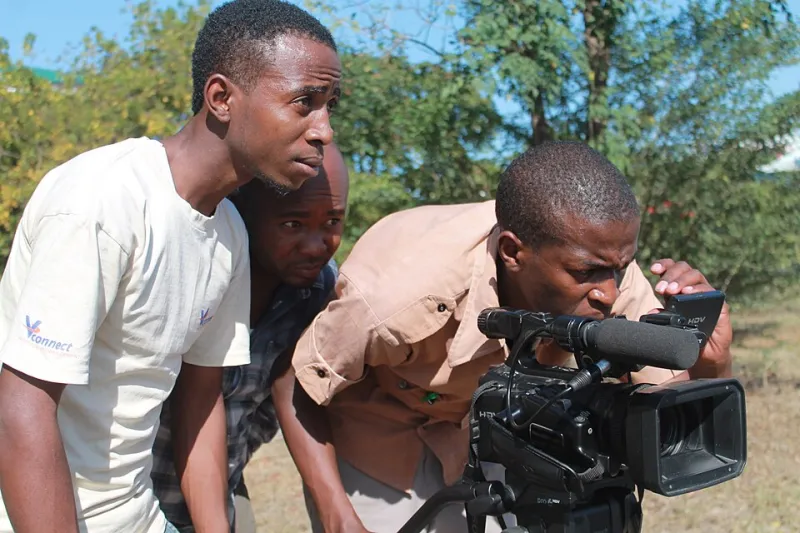
A regional reporter stands in front of the actual thing — the closed road, the reopened market, the flooded field — and talks in a normal register. It's not polished. It's credible, and credibility is worth more than polish.
The steal: put real people in front of real places and let them speak in their own words, in their own accent, at their own pace. Don't script them into a brand voice. Stand them somewhere that proves the story and let the location do half the talking. It's the single biggest upgrade available to most UK brand films, and it costs nothing but patience.
The missing sign-off
One more, if you've room. The "and finally" slot at the end of regional news — the story that exists purely to send you off feeling alright about where you live. A dog that learned to use a bus. A village fete. A bloke with a shed.
The steal: end warm, not grand. A single human moment after the argument has been made. A smile, a laugh, a handshake. It's the thing people remember, and it's the thing trailers never give you.
None of this means making brand films look cheap. It means making them look local — fluent in the grammar of the country they're shown in, rather than dubbed from somewhere else. Regional telly has spent seven decades learning how to talk to British people on a Tuesday evening. Borrowing a little of that is not a step down. It's a shortcut to being understood.