The Cheapest Cinematic Upgrade on Any UK Shoot Isn't a Lens
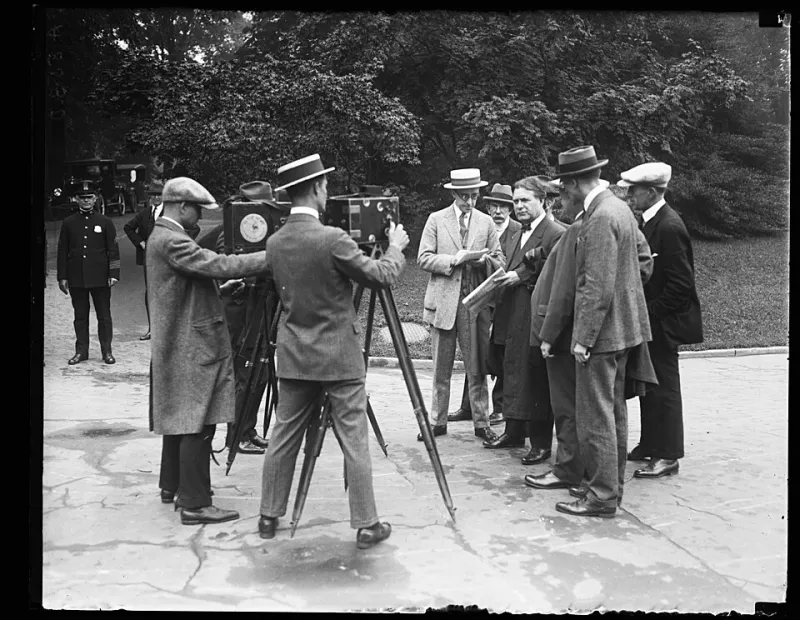
Photo: Harris & Ewing, photographer, Public domain, via Wikimedia Commons
There's a particular kind of disappointment that lands in the edit suite. The camera was sharp, the grade was tasteful, the sound was clean — and the film still feels like a corporate video shot in a room where nobody lives. Nine times out of ten, the culprit isn't the lighting. It's that nobody dressed the set before the lights went up.
On a UK brand shoot with a crew of three or four, there is no art department. There's no runner with a van full of vases and no stylist on a day rate. What you have is a recce, a boot full of charity-shop finds, and the freedom to move things around before anyone presses record. That's genuinely enough. Art direction is the cheapest production value a small crew can buy, and it costs mostly time and nerve.
Start at the recce, not the grade
The most common mistake is treating production design as a fix-up job on the day. You turn up, the room is beige, the sofa is beige, the person on camera is wearing beige, and suddenly you're solving a colour problem with a light meter.
Flip it. On the recce, walk in and ask three questions: what's in the frame that shouldn't be, what's missing that would help, and where can the camera stand without a plug socket ruining the shot. Photograph the room from the angles you plan to use, not from the doorway. It's astonishing how many awkward corners disappear once you actually look through the viewfinder rather than from standing height.
The recce is also when you ask permission. "Could we move the bookshelf half a metre?" is a much easier conversation two weeks out than it is at 8am on shoot day when the office manager is unlocking the door.
Take things away first
Every dressing decision should start with subtraction. Real UK homes and workplaces are full of visual noise: fridge magnets, lanyards on chair backs, a wall of framed certificates, the bin that's slightly too close to the desk. None of it is anyone's fault. All of it competes with the face you actually want people to look at.
So make a taking-away list before you make a bringing-in list. Clear the surfaces. Tuck the bins out of frame. Take down the noticeboard with fourteen overlapping memos. If it's a workplace and the noticeboard is genuinely part of the story, leave it — but dress it, straighten it, and lose the curling corner.
There's a reason this matters on a small-crew shoot especially: you don't have the lighting package to separate a busy background from the subject. If the room is doing too much, the answer isn't more lamps. It's fewer objects.
The charity-shop principle
Here's the honest secret of small-crew production design in the UK: most of what you need already exists in a charity shop on a high street near you, for less than the price of a round of coffees.
A few reliable categories to hunt for:
- Textiles. Cushions, throws, tablecloths, tea towels. Fabric kills echo and adds depth to a flat wall in one move.
- Ceramics and glass. A couple of mugs, a jug, a small bowl. These give hands something to do and give the frame somewhere for the eye to rest.
- Books and magazines. Stacked, not shelved. Two or three with the spines turned the right way is plenty.
- Greenery. Real or convincing fake. One plant in the corner of a wide shot can carry an entire room.
Buy more than you think you need and keep the receipts where the shop allows returns. Half of it will come home untouched, and that's fine — the point is having options in the boot when the room turns out to be different from the photo.
Wardrobe is production design too
This is where small crews lose the most ground with the least effort. The person on camera is the biggest object in the frame, and their clothes are a colour decision whether you planned them or not.
A few rules that hold up across almost any UK brand film:
- No fine stripes, no tight checks, no small logos. They shimmer on camera and pull the eye away from the face.
- Pick two or three colours that already exist in the room. If the office has warm wood and green chairs, a mustard jumper sings. A neon pink one declares war.
- Avoid pure white under hard light. It blows out and drags the exposure with it. Off-white, cream, oatmeal — all kinder.
- Layers beat single garments. A shirt over a tee gives you something to adjust and a bit of texture to light.
Send a two-line note to contributors a week before the shoot. "Please bring two options — something plain in a warm tone and something dark. Avoid logos and fine patterns." That's it. That message has saved more shots than most lighting diagrams.
Dress the frame, not the room
One discipline worth internalising: you are not decorating a room, you are dressing a rectangle. Anything outside the frame is irrelevant. Anything inside it needs to earn its place.
So when you've set the room, put the camera on the tripod and look at the monitor. Then walk into the shot and remove the first three things that catch your eye that aren't the subject. It's a brutal exercise and it almost always improves the frame.
This is also why a small crew can punch above its weight. You're not dressing a whole building. You're dressing a handful of rectangles, one at a time, with a boot full of cheap fabric and a bit of nerve.
Give the grade an easy job
Colourists will tell you the same thing: a well-dressed, well-lit frame takes fifteen minutes. A badly dressed one takes an afternoon and still looks like an afternoon's work. When the palette in the room is coherent — three or four tones that repeat across walls, wardrobe and props — the grade becomes a matter of small nudges rather than rescue missions.
That's the real argument for starting with design. The grade isn't a fix. It's a finish. And a finish only looks like a finish when the thing underneath it was already right.
The takeaway
No art department, no problem. Recce for design, subtract before you add, raid the charity shops, send the wardrobe note, and dress the rectangle rather than the room. Do that and the lights have a much easier job — and so does the editor.
It's the cheapest upgrade on the call sheet, and it happens before a single lamp is switched on.