Concrete, Sodium Light and a Better Story: Scouting the UK's Everyday Edges
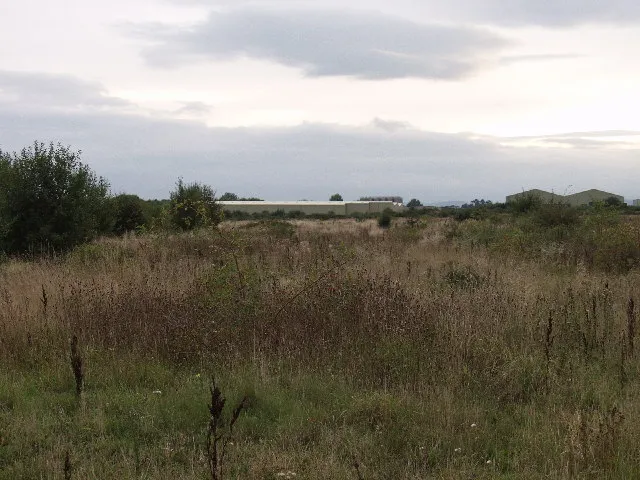
Photo: John Haynes, CC BY-SA 2.0, via Wikimedia Commons
There is a particular kind of UK brand film that opens with a Thames-side skyline, a glass office and a slow-motion handshake. It is not wrong, but it is not the whole country. Some of the most convincing footage in 2026 comes from places that never make the location mood board: service roads, retail parks, loading bays, warehouse yards and the edges of industrial estates.
These places have a bad reputation because they are often photographed badly. Shot flat, they look like a safety induction. Scouted with curiosity, they offer geometry, scale, colour and a kind of honesty that glossy locations struggle to fake. The trick is not to pretend a depot in the Midlands is a Shoreditch studio. The trick is to let it be a depot in the Midlands and find the frame that makes it sing.
Why ordinary places read as true
Audiences recognise their own world. A regional audience can tell when a location has been dressed to look like somewhere else. They may not articulate it, but they feel the mismatch. A real workshop, a real yard and a real team carry a believability that stock footage cannot buy.
That matters for brands whose story is about logistics, manufacturing, repair, craft or service. A logistics company filmed in an actual distribution centre says more than a generic city skyline. A family-run engineering firm filmed beside its own unit says more than a borrowed glass lobby. The backdrop is doing narrative work, even when no one is talking.
What to look for on a scouting walk
Start with the bones. Long service roads give you leading lines. Loading bays give you frames within frames. Pallet stacks and containers give you colour and repetition. Fencing, fire escapes and rooflines give you foreground texture. Puddles and wet tarmac are free production value in the UK, provided you keep the camera dry and the crew safe.
Look at how the place changes through the day. Overcast light is the default here, and it is softer than people think. Blue hour can make sodium and LED lighting feel cinematic without a heavy grade. Midday is not automatically the enemy, but it is harder to make a plain yard look interesting when the sun is directly overhead.
Framing the widescreen in a small place
A long lens can compress a row of units into something almost graphic. A low angle can give a forklift or a loading ramp a sense of scale. A foreground frame — a doorway, a fence, a stack of pallets — can add depth without adding clutter. Symmetry is everywhere on industrial estates, from roller doors to road markings, and it is easy to overdo.
Keep human scale in the frame. A wide shot of an empty yard is a location plate. A wide shot with one person walking across it is a story. If the brand is about people, the place should not swallow them. If the brand is about scale, let the person be small but intentional.
Permissions: the boring bit that saves the shoot
Most industrial estates are private land. The fact that a road looks public does not mean it is fair game for a crew, a tripod and a van. Ask the estate manager or landowner first, then the tenant of the unit you actually want to film. Retail parks usually have centre management. Council land needs the council. Get written permission and keep it on the phone.
On public highways, do not block access, cycle lanes or pavements. Park legally. Keep the crew small where possible. For drone work, follow CAA rules, check local restrictions and do not fly over people or live operations. Insurance and a risk assessment are not paperwork for the sake of it; they are what let you move quickly when a site manager asks a sensible question.
Safety on a live site
Industrial estates are workplaces, not sets. Vehicles move, forklifts turn, loading bays open without warning. Hi-vis is the minimum. A banksman is sensible when vehicles are moving. Keep cables out of roadways. Do not stand in marked zones just because the light is nice. If the site has a safety induction, take it seriously and build the schedule around it.
Sound is part of safety, too. If you cannot hear a reversing vehicle because the headphones are on, you are too close to the action. Keep one ear free and let the location manager do their job.
Sound design: let the place speak
The worst thing you can do to a warehouse is scrub all the texture out and replace it with a generic ambient pad. These places have a sound: distant traffic, HVAC hum, gates, footsteps, the clatter of a pallet truck, a radio in the background. Record atmos on the day and use it. It will make the grade feel more expensive because the picture and the sound agree.
Use music to shape pace, not to wallpaper the whole piece. Let a sync line breathe. If the edit needs a lift, try a sound effect from the location before you reach for a whoosh. The result is less polished in a showreel sense and more believable in a brand sense.
Grading: texture, not grime
Do not crush the blacks just because it is an industrial estate. Do not push a teal-and-orange look that makes a Coventry depot feel like a car advert. Protect the highlights from sodium lamps and mixed LED. Keep skin tones neutral. Use power windows to guide the eye rather than to fake a sunset.
Overcast footage often has a lovely soft contrast. Lean into that. Add a little halation if it suits the brand, but do not fog the whole frame to hide the location. The point is to find beauty in the place as it is, not to apologise for it.
The brand story argument
The case for ordinary places is not just aesthetic. It is strategic. A regional texture tells a more believable story about where a company comes from and who it serves. It can make a national brand feel local, or a local brand feel substantial. It can also save money, because you are not paying for a London look that the audience may not even believe.
Scout with a story in mind. Ask what the place says about the people who work there. Then frame it, light it, record it and grade it so that the answer is clear. Beauty is not only in the postcard. Sometimes it is in the service road at 4pm, with the sodium lights coming on and a forklift waiting for its close-up.