Cut Before the Scroll: A Stopwatch Guide to UK Showreels That Hold Their Ground

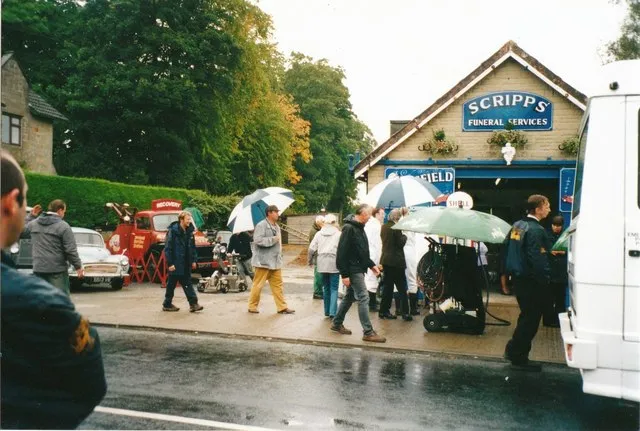
Photo: Ubisoft, Public domain, via Wikimedia Commons
Most showreels are not too long. They are late. The first eight seconds are often a logo, a slow drone push and a title card, while the actual proof — a person, a problem, a result — waits until halfway through. In 2026, with UK viewers watching on phones in kitchens, on trains and in between meetings, that is a costly way to open.
The 90-second rule is not a law. It is a useful container. It forces a decision about what the reel is for and who it is talking to. A 90-second master can hold a story, a bit of texture and a clear next step without turning into a highlights reel for the edit suite. The trick is to treat the first minute as a sequence of jobs, not a mood board.
Start with the stopwatch, not the timeline
Before you tweak the grade or audition another track, export the first eight seconds on its own. Watch it on a phone. Watch it with sound off. Watch it with someone who does not know the client. Then ask three blunt questions: what is this, who is it for, and why should I keep watching?
If the answer is 'it looks nice', the opening is not doing enough. Nice is not a hook. A hook is a human face, a surprising action, a clear tension or a result that makes someone want the explanation.
The first eight seconds: proof over polish
Open on the thing the client actually sells: a maker's hands, a site foreman giving instructions, a customer's reaction, a product being tested, a team solving something in real time. A regional street sign or a workshop doorway can do more than a generic skyline because it tells the viewer they are in a real place, not a stock library.
The practical check is simple. Can a stranger describe what you do after eight seconds? If they say 'video production' because the logo says so, that is not the same as feeling it. Hold the logo until after the first human proof, unless brand recognition is genuinely the point of the piece.
0:08 to 0:30: establish human proof
This is where the reel stops being a trailer and starts being an argument. Introduce one person, one place and one thread. Let a voice carry a sentence. Show a process that has consequences. Avoid the temptation to cut away every two seconds just because the footage is pretty.
An editor's check: every cut should either answer a question or raise one. If a shot only says 'we had a camera on a gimbal', park it. UK audiences are good at spotting padding, especially when the same drone move appears three times with different music.
0:30 to 1:00: place the visual surprise
Every strong reel has one moment that makes someone look up. It does not need to be a VFX shot. It could be an unexpected scale — a warehouse aisle that looks like a cathedral, a machine that fills the frame, a transformation shown in a single unbroken take. It could be access: a behind-the-scenes moment that feels like it should not be on camera.
Put that moment before the one-minute mark. If the best shot is at 1:12, the reel is asking viewers to wait too long for the payoff. A visual surprise is also a shareable frame. Ask yourself: would anyone screenshot this? If not, keep looking.
1:00 to 1:30: land the story and ask
End with a clear next step, not a pile of them. One call to action is stronger than three competing ones. It might be 'book a call', 'see the full case study' or 'send us a brief'. Keep the end card short, readable and consistent with the rest of the reel.
Before the card, land on a human beat or a result. A final shot of a person looking satisfied, a finished space, a product in use — something that closes the loop opened in the first eight seconds. If the reel can loop cleanly, even better, but do not sacrifice clarity for a clever match cut.
Platform behaviour is not a postscript
A 90-second master is not a universal delivery format. UK viewers meet reels in vertical feeds, muted autoplay and crowded tabs. Make a vertical cutdown that keeps the first eight seconds intact, add burned-in captions for sound-off viewing, and check the first frame as a still image. If it looks like a title card, it is probably not doing its job.
Producers should brief for the cutdowns at the same time as the master. Ask for a 30-second version and a 15-second teaser, but do not simply chop the timeline at random points. Keep the human proof and the visual surprise. Lose the setup, not the story.
An editor's final pass
- Watch the first eight seconds without sound. Does it still communicate?
- Is there a human face or human action before the logo?
- Can you name the one idea the reel is selling?
- Does the visual surprise arrive before 1:00?
- Are captions present and readable on a phone?
- Is there exactly one call to action?
- Does the last frame connect back to the first?
- Would you keep watching if you were not being paid to?
A 90-second reel is not about cramming more in. It is about arriving early, proving something quickly and giving the viewer a reason to stay past the scroll. The stopwatch is not the enemy of craft. It is the thing that makes craft visible.