The Face Already in the Building: Casting Real UK Staff for Brand Films That Breathe
There is a moment on every brand film when the audience decides whether to believe you. It usually is not the sweeping drone shot or the clever cut. It is a face. A hand. The way someone pauses before answering a question because they are actually thinking about the answer. That is the moment real staff tend to win.
Trained actors are brilliant at hitting marks, holding a look and saying a line for the ninth time without sounding like it. But in a UK brand film, polish is not always the point. Often the point is proof: proof that there are real people behind the logo, doing real work, with real shorthand and real tea-break humour. The trick is not to throw craft out of the window. It is to point the craft at the right person.
Why the person who does the job beats the person who plays one
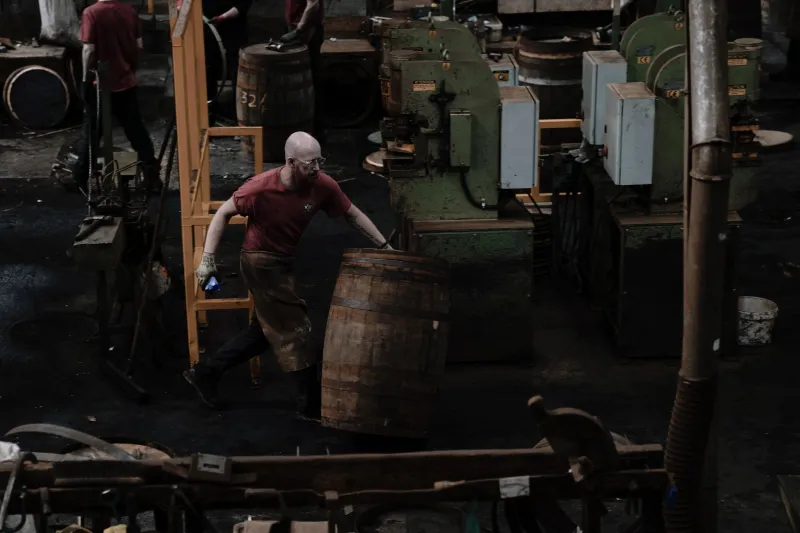
Picture a Yorkshire manufacturer of commercial door systems. The managing director wants a film that shows precision, care and a bit of graft. The obvious route is two actors, a tidy workshop and a script about heritage. The better route is usually Dawn from the fitting bench, who has been with the firm for eleven years and can tell you why a half-millimetre matters without reaching for a thesaurus.
Dawn does not perform. She works. She holds the tool the way someone holds it when they have done it ten thousand times. She glances at a colleague when she needs a second pair of hands. She wipes her hands on her trousers before shaking someone's hand. Those tiny behaviours are the film. An actor can imitate them. A real person simply has them.
That is not a argument against actors. It is an argument for casting the right kind of truth. If the film needs a fictional customer in a fictional kitchen, cast an actor. If the film needs to show the people who make, fit, repair or serve, start by looking at the people already on the payroll.
Find the naturals without turning it into an audition
A formal casting call can frighten off exactly the people you want. Instead, ask team leaders who explains things well, who is calm under pressure and who gets on with everyone without hogging the spotlight. The best contributors are often not the loudest people in the room. They are the ones colleagues instinctively go to when something needs sorting.
Keep the first conversation informal. A twenty-minute chat in a canteen or a quiet office is usually enough. You are not looking for performance energy. You are looking for ease, clarity and a willingness to be there. Ask them to describe their job in their own words. Ask what people always get wrong about it. Ask what a good day looks like. If they can answer those questions without sounding like a corporate video, you are in business.
Be straight about what is involved: time, cameras, a microphone, maybe a repeat or two, and a release form. If someone would rather not, thank them and move on. You cannot force authenticity, and you should not try.
Brief for behaviour, not line readings
Over-scripting is the fastest way to make a real person look like a bad actor. Instead of handing over a page of dialogue, give them a job to do. A simple prompt works better than a speech: show a new starter how you check this joint. Walk a customer through what happens when they call. Explain why you still do this step by hand.
The director's job is to create conditions, not recite words. Ask questions from just off-camera and let the answers become the voiceover. Give them an objective, a person to talk to and a reason to care about the next thirty seconds. If they stumble, keep rolling. The recovery is often more useful than the polished take.
Also, avoid turning the shoot into a public speaking contest. No one needs to sound like a TED talk. They need to sound like themselves, only slightly more focused.
The consent conversation comes before the camera
Before anyone stands in front of a lens, have a proper conversation about consent. Explain where the film will appear, how long it might be used, who will see it and what happens if they change their mind. Use a clear contributor release form, get manager sign-off where needed and keep a record. This is not admin for its own sake. It is how you protect the contributor and the brand.
Do not bury the form in a stack of paperwork five minutes before the shoot. Send it in advance. Talk it through. Ask whether they would like to see a rough cut before it goes live. That is not always possible or legally required, but it builds trust. And trust shows on camera, even when the camera is pretending not to notice.
Capture the in-between bits
Some of the best moments happen before you say action. Roll early. Use a longer lens. Keep the sound recordist close enough to catch the natural chat. Let people repeat a task rather than pose it. If someone laughs because a colleague makes a daft comment, keep it. If they pause to think, keep that too.
Do not fill every silence. Real workshops and service vans are full of useful noise: a drill, a kettle, a van door, a clipboard being picked up. Those sounds do more for a UK brand film than a library track ever will.
Make it look cinematic anyway
Real does not mean flat. Light the workspace with shape rather than flooding it. Use motivated sources, shallow depth of field and a considered colour grade. Frame your contributors like protagonists, not extras. Let the camera move with purpose. The sweet spot is a real face inside a crafted frame. That contrast is what makes a brand film feel honest and expensive at the same time.
The best film is not a performance. It is a record of someone who knows their job being seen properly. So before you book a cast, walk the floor. The face you need is probably already in the building.