Small Footprint, Big Yes: Winning Round UK Locations That Haven't Quite Agreed
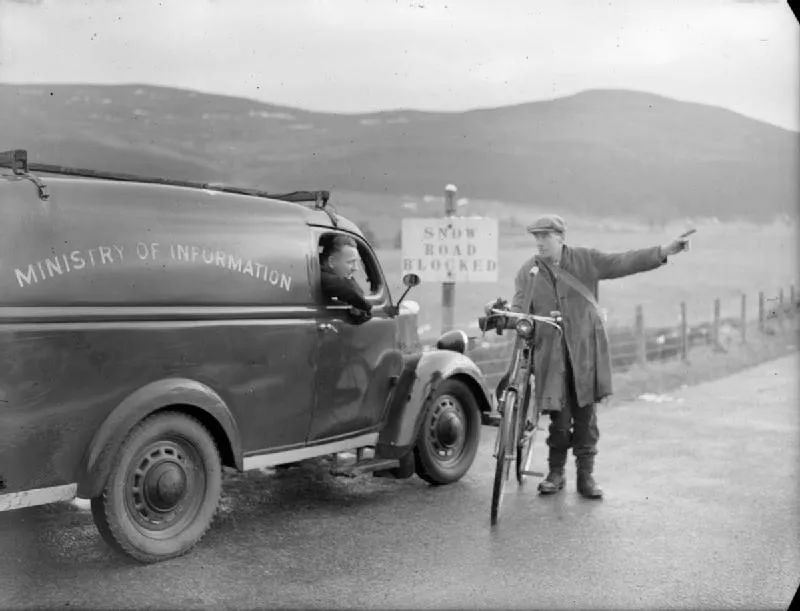
Photo: Ministry of Information Photo Division Photographer, Public domain, via Wikimedia Commons
There is a particular kind of email that lands in every UK producer's inbox. It reads something like: thanks for your enquiry, we are not sure yet, leave it with us. No dates. No firm no. Just a maybe hanging in the air like a winter breath.
The amateur move is to treat that as a wall. The professional move is to treat it as a question. Somewhere behind that maybe is a person protecting something: footfall on a high street, a residents' parking bay, a listed facade, a liability spreadsheet, or simply their own reputation if your crew turns out to be a nightmare. Your job is to answer the question they have not quite asked.
A maybe is usually about risk, not you
Councils, private landlords, town centre managers and business improvement districts are not in the business of saying no for fun. They are in the business of not creating problems for themselves. A film crew is an unknown quantity. Will you block the pavement? Will your lights trip the electrics? Will anyone trip over a tripod? Will the shop below lose a morning's trade and complain to the landlord for a month?
So do not arrive with a big creative vision and a small paragraph of practical detail. Flip it. Lead with the practical detail and let the creative vision be the bonus. The person saying maybe needs to see that you have thought about the boring bits before they will feel comfortable lending you the keys.
Knock on the right door first
Before you write a beautiful location request, work out who actually decides. A council's general enquiries inbox is not the same as its film office. A high-street unit is not always controlled by the shop manager; it might be a centre manager, a landlord, an asset management company or a BID. A private house might be owned by someone who lives abroad and has an agent who lives on email.
Ask three questions early: who signs this off, what do they need from us, and what is their realistic lead time? Then repeat those answers back in writing. If parking suspensions or road closures are involved, the lead time is not a vibe; it is a process. Build that into the schedule before you promise a client a date.
Bring the boring stuff in one tidy PDF
A location contact does not want to hunt through five attachments. Put the pack together before they ask for it. Typically that means public liability insurance, a risk assessment and method statement, a one-page recce summary, a crew list, vehicle details, a simple schedule and a draft filming notice for neighbours if needed. If a location release is required, have your version ready to compare with theirs.
Make it easy to say yes. If your insurer provides a certificate showing £5m or £10m cover, send the current one. If your method statement is two pages of clear bullet points rather than twelve pages of generic boilerplate, send that. If you have filmed somewhere similar, say where and offer a reference. This is not bureaucracy for its own sake. It is a paper trail that lets a cautious person defend their decision to their boss.
Shrink the ask until it fits
Here is where smaller crews earn their keep. A two-person team with one camera, a couple of lenses and a clear plan is much easier to approve than a ten-person unit with a lighting van and a generator. That is not just a budget point; it is a permission point.
Can you shoot handheld or with a gimbal instead of laying track? Can you work with available light and a reflector rather than rigging a mini studio? Can you start after the morning delivery rush and wrap before the school pickup? Can you use a longer lens from a lawful spot rather than closing a pavement? Can you split the shoot into two short visits rather than one long occupation? Every reduction in footprint is another reason for the decision-maker to say yes.
The polite chase is a skill
Do not send a bare email asking for an update. Send something that moves the decision forward. Attach the revised risk assessment. Confirm that you can move the start time to 10am to avoid deliveries. Offer to reduce the crew by one. Ask whether a site visit would help. Then log the call and confirm the outcome in an email.
Give people a reasonable window, then follow up with new information rather than pressure. A paper trail is not a sign of distrust. It is a gift to whoever inherits the inbox when your contact goes on leave. It also means that when someone says yes, you can point to exactly what was agreed: times, areas, vehicles, crew numbers and conditions.
Remember the neighbours
A high-street manager may say maybe because they are already imagining the conversation with the shop next door. Help them have it. A short, plain-English filming notice through letterboxes or under doors can do more than a dozen phone calls. So can a quick word with the cafe owner whose morning rush you are about to interrupt. Buy a coffee. Ask when their quiet hour is. Then schedule around it.
This is not soft stuff. It is production planning with better manners. A location that feels respected is a location that will have you back. That matters for showreels, brand films and the unglamorous repeat work that keeps a production company alive.
If the maybe stays a maybe
Have a B location. Do not shoot without permission and do not convince yourself that a quick setup on a public pavement is somehow exempt. If the answer is still no, find a lawful alternative: a different exterior, a private courtyard, a long-lens angle from a permitted spot, or a studio build that suggests the place without borrowing it.
At Oncor Video, the can-do part is not about bulldozing a no into a yes. It is about making the yes easier to reach. A smaller crew, a smarter schedule and a tidy paper trail will not guarantee every location, but they will turn a surprising number of maybes into call sheets. And when the shoot day arrives, the best feeling is not just being allowed in. It is being trusted while you are there.