The Cosy Frame: Making Cramped UK Rooms Look Like a Deliberate Set

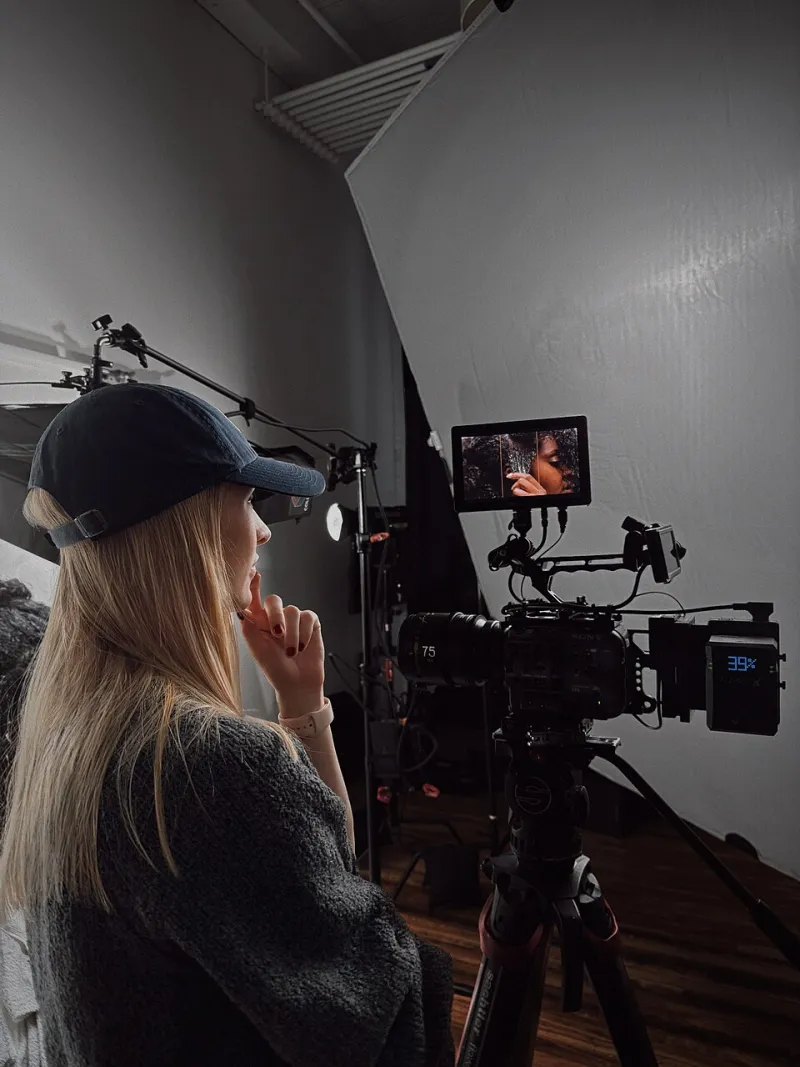
Photo: cinematic interview setup in small room softbox camera UK office, via s1.dmcdn.net
Good interviews rarely need a warehouse. In 2026, plenty of UK brand films and showreels are being shot in rooms with a desk, a fire door and just enough space to swing a softbox. That is not a compromise if you treat the room as part of the story. The trick is to stop fighting the square footage and start directing it.
At Oncor Video, the best talking heads often come out of spaces that felt unpromising at first glance: a glass-walled meeting room in Manchester, a rented studio bay in Bristol, a spare bedroom in Leeds with a box room's worth of floor. The room does not have to be big. It has to look intentional.
Start with the room you actually have
Before you unpack a single light stand, walk the space with the camera off. Look for depth, not width. A corner with a window on one side and a bookshelf on the other will usually beat a flat wall, even if the flat wall is bigger. Depth gives you separation between the subject and the background, and separation is what stops an interview looking like a passport photo with a lav mic.
Check the boring things too: sockets, ceiling height, fire exits, air conditioning and whether the room hums when the fridge kicks in. In UK offices, the loudest thing is often the thing nobody mentions until you roll. Ask early. Move a desk if you can. Shift a chair. Clear a sightline. You are not redecorating; you are making a frame.
Lenses and framing: lean into the squeeze
A tight room does not automatically mean a wide lens. Ultra-wide glass will bend the doorframes and make your subject's nose do more work than their answers. A 35mm to 50mm equivalent lens is a safer starting point for a natural, cinematic feel. If the room is truly snug, use the longer end and step back as far as the wall allows. Then cheat the rest with framing.
Sit the subject slightly off-centre rather than dead middle. Give them somewhere to look that is not the lens, especially if the interview is conversational. Keep the camera at eye level or just above; low angles can feel bullyish in small rooms, and high angles can feel like a security camera. Use foreground when you have it. A plant, a lamp or the edge of a desk in the first few inches of frame adds depth and hides the fact that the room is the size of a postage stamp.
Do not forget cutaways. Hands on a notebook, a mug being lifted, a laptop closing, a coat on the back of a chair. In a small space, those details buy you variety in the edit and make the interview feel filmed rather than recorded.
Light that flatters without cooking anyone
Portable LED panels are brilliant, but they are also capable of making a human being look like they are being interrogated. Start with the window if there is one. Diffusion over glass, a white wall or a bounce board opposite, and you have a soft key that costs nothing but patience. UK daylight changes fast, so keep an eye on it and have a plan for the cloud that arrives at 2pm.
For a small room, a single bi-colour panel with a softbox or diffusion, placed close and slightly above eye level, is often enough. Close and soft beats far and fierce. Add a subtle fill from a bounce or a second panel at low power, and keep the background from going black by letting a practical lamp do some work. Match colour temperatures as best you can; mixed orange and blue light is not moody, it is a giveaway.
Do not melt your subject. If they are squinting, sweating or looking like they are about to be beamed up, the light is too hard or too close. Give them a break, adjust the diffusion and check the monitor rather than the back of the camera.
Sound in echoey rooms: tame before you treat
A hard-walled meeting room will make a lav mic sound like it is inside a biscuit tin. Before you reach for plugins, reach for soft things. Coats on chairs, a rug if one exists, curtains, cushions, a sofa, a bookshelf. If the room has a carpeted corner, use it. If it has a glass table, move away from it or cover it.
Get the mic close. A lavaliere positioned properly will beat a boom that is too far away, and a boom just out of frame will beat both if you have the hands for it. Kill the air conditioning during takes if you can, silence phones and ask people not to click pens. Record 30 seconds of room tone so the edit has something to sit under the cut. And wear headphones. The echo you hear on set is the echo you will fight for hours later.
Art direction without a build crew
You do not need a set build to add production value. You need one or two deliberate choices. Clear the clutter, then put back a few things that say something about the person or the brand: a plant, a stack of books, a mug, a framed print, a notebook that is not branded with a competitor. Hide the printer, the bin and the tangle of cables. If the background has a logo you cannot show, move the camera or move the object.
Pick a simple palette. In a spare bedroom, use the curtain or a plain wall as a backdrop and let the bed act as a giant soft furnishing. In an office, use the architecture you already have: a sash window, a brick wall, a glass partition with something interesting behind it. The aim is not a fake studio. The aim is a room that looks like someone chose it.
The spare bedroom special
Bedrooms are underrated. They are quiet, they have soft surfaces and they often have lovely window light. The trick is to avoid making the bed the elephant in the frame. Shoot into a corner, keep the ceiling out of shot, use a curtain as a natural backdrop and move anything with a distracting pattern. If the bed is in frame, dress it plainly or use it as a foreground softener. And check the mirror. Nothing ruins a cinematic interview faster than a reflection of the crew eating a meal deal.
A can-do checklist for shoot day
- Walk the room for depth and noise before rigging.
- Choose a lens that flatters faces, not one that shows off the square footage.
- Put the light close, soft and slightly high; check for squint.
- Tame echo with soft furnishings and a close mic.
- Clear clutter, add one or two purposeful props, hide cables.
- Record room tone and shoot cutaways while the energy is good.
Small rooms are not a downgrade. They are a chance to be close, controlled and specific. In a UK production landscape where budgets are real and schedules are tight, that is often exactly the mood a showreel or brand film needs: intimate, deliberate and quietly cinematic.